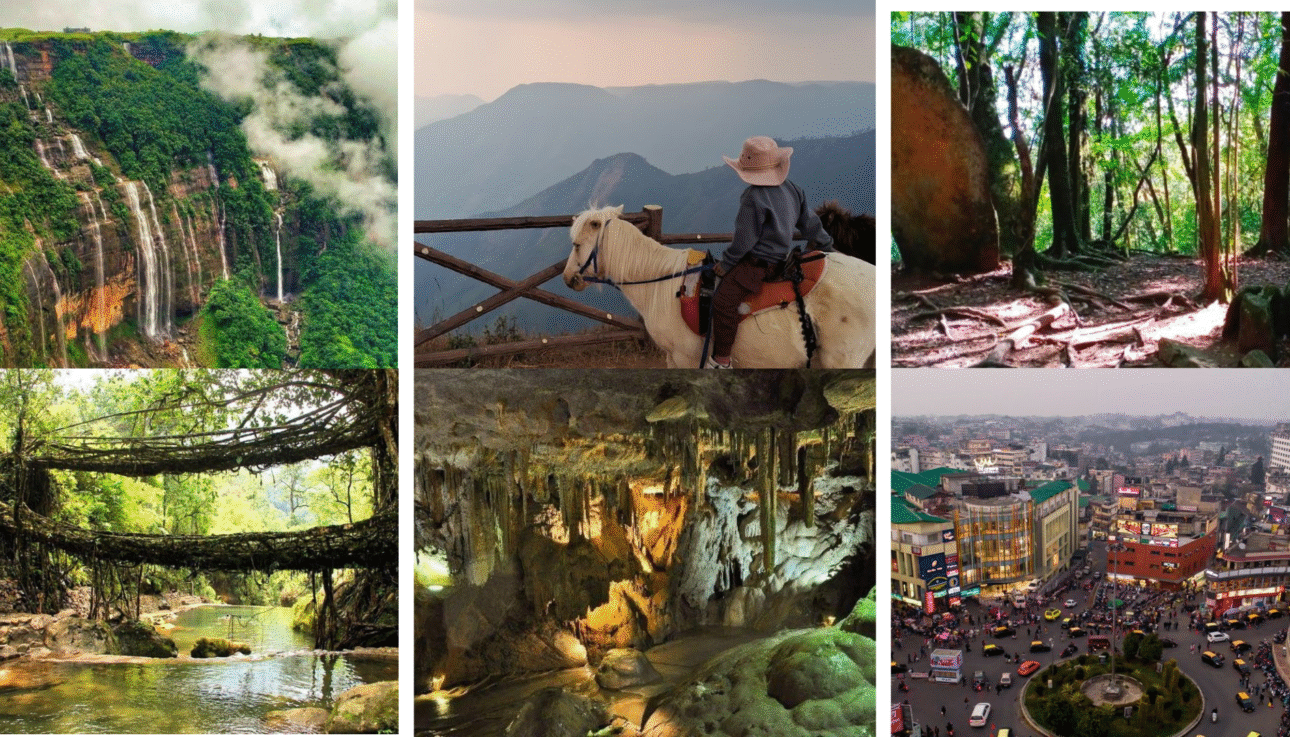
Double decker living root bridge -The Double Decker Living Root Bridge in Meghalaya is a unique natural wonder located in Nongriat village, crafted by the indigenous Khasi tribe. This extraordinary bridge is bio-engineered from the living roots of rubber trees (Ficus elastica), guided and intertwined over decades to form a sturdy, two-tiered structure spanning rivers and streams in Meghalaya’s rain-soaked hills. The “living” aspect means the roots remain alive and continue growing, making the bridge stronger over time, capable of carrying around 50 people and potentially lasting up to 500 years.
Its unique double-decker design was developed to withstand rising river levels during the monsoon, providing resilience and safe passage even when the lower level is submerged. The bridge stands as a remarkable symbol of harmony between nature and human ingenuity, drawing adventurers and nature lovers alike to experience its beauty and the challenging trek through lush forests and waterfalls required to reach it. This trek involves navigating around 3,500 steps from Tyrna village near Cherrapunji to Nongriat and is considered moderately challenging but rewarding.
Latium canyons – Laitlum Canyon, located about 24 kilometers from Shillong in the East Khasi Hills of Meghalaya, is known as the “End of the Hills.” It offers breathtaking panoramic views of steep valleys, rolling hills, deep gorges, and lush green landscapes often blanketed with mist or clouds. The canyon’s dramatic terrain resembles an amphitheater with vibrant hues changing throughout the day, making it a favorite spot for trekkers, nature lovers, and photographers. It features challenging trails and nearly 3,000 steps that lead down to remote villages, providing an immersive experience of Meghalaya’s natural beauty and tribal culture. The best time to visit Laitlum Canyon is from October to March when weather is clear and pleasant.
Umiam lake -Umiam Lake, also known as Barapani, is a large artificial reservoir located about 15 to 21 kilometers north of Shillong in the Khasi Hills of Meghalaya. Created in the early 1960s by damming the Umiam River as part of a hydroelectric power project, the lake is surrounded by rolling green hills and scenic landscapes. It is a popular tourist destination for its serene beauty, boating, water sports, and opportunities for nature walks and bird watching. The lake’s calm, clear waters and lush surroundings make it an ideal spot for relaxation and photography, often compared to the “Scotland of the East.” Umiam Lake is easily accessible from Shillong, making it a favorite for day trips and weekend getaways.
Seven Sister Water Falls – The Seven Sisters Waterfalls, also known as Nohsngithiang Falls, is a spectacular seven-segmented waterfall located near Mawsmai village in the East Khasi Hills district of Meghalaya, India. It plunges from a height of about 315 meters (1,033 feet), making it one of the tallest waterfalls in India. The waterfall is named “Seven Sisters” because it consists of seven distinct streams flowing side by side down the limestone cliffs during the monsoon season, creating a breathtaking curtain of water. This natural wonder is not only a major tourist attraction but also holds cultural significance, symbolizing the unity of the seven northeastern states of India. The best time to visit is during the monsoon months from June to September when the waterfall is in full flow.
Elephant Falls – Elephant Falls is a beautiful three-tier waterfall located about 12 kilometers from Shillong in Meghalaya. The falls are formed by a mountain stream cascading over three successive levels through lush greenery, creating a serene and picturesque setting. Originally named “Ka Kshaid Lai Pateng Khohsiew” meaning “Three-Step Waterfall” in the Khasi language, it was later called Elephant Falls by the British due to a rock resembling an elephant near the falls, which was destroyed in an earthquake in 1897. The tallest and most spectacular third tier offers crystal-clear water flowing over sharp rocks, making it a popular spot for nature lovers and photographers. The falls are easily accessible with steps and viewing platforms, surrounded by rich ferns and trees.
Mawsmai Cave – Mawsmai Cave is a stunning limestone cave located about 6 kilometers from Cherrapunji (Sohra) in Meghalaya’s East Khasi Hills. The cave is known for its impressive stalactites and stalagmites, formed over millions of years by mineral deposits from dripping water. It is easily accessible and well-lit, making it a popular tourist attraction for exploring Meghalaya’s unique underground landscape. The cave stretches about 150 meters and features narrow passages and spacious chambers, offering visitors an exciting blend of natural beauty and adventure. The surrounding area is lush and scenic, adding to the overall experience.
Mawphalang Sacred Forest Garden Of Caves – Mawphalang Sacred Forest Garden of Caves is a renowned natural heritage site in Meghalaya, known for its dense forest and unique limestone cave formations. The forest is considered sacred by locals and is a protected area rich in biodiversity, offering visitors a chance to explore both spiritual and natural wonders within its serene environment. This site combines the mystery of caves with the tranquility of the sacred forest, providing a distinctive experience of Meghalaya’s natural and cultural heritage.
Police Bazar – Police Bazar is the bustling commercial and market center of Shillong, Meghalaya, known for its vibrant atmosphere and lively shopping experience. It is a popular destination for tourists and locals alike, offering a mix of traditional handicrafts, modern apparel, jewelry, and street food. Located at the heart of Shillong, Police Bazar is culturally rich and surrounded by notable attractions, making it a must-visit for those seeking to experience the local culture and cuisine in a vibrant urban setting. The market is well laid out, traffic-free for safety, and operates throughout the year, attracting shoppers looking for souvenirs, clothes, and authentic regional products.